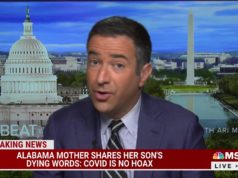
Key Topics Discussed:
1. U.S.–Iran Conflict: Escalation, Strategy, and Consequences
War‑of‑Choice Narrative: The segment opened with an examination of President Trump’s continued “war on Iran,” describing it as a self‑appointed conflict that has led to significant casualties—over 4,600 people in Iran, a million displaced residents, and 13 American service members killed.
Strategic Objectives vs. Reality: Reporters highlighted the President’s declared goals of regime change, securing enriched uranium, and degrading Iranian missile capabilities. Analysts noted that these aims have not translated into tangible progress; Iran remains able to launch drones, missiles, and attacks on U.S. interests in the region.
Resource Strain: The conversation touched on the massive cost of U.S. munitions—more than 850 Tomahawk cruise missiles fired in four weeks alone—and the urgent need for additional funding. Defense officials admitted that U.S. forces are operating with dwindling reserves of advanced interceptors, forcing reliance on costly alternatives.
Humanitarian Impact: The war’s toll was underscored by civilian casualties—most notably a 160‑person death toll in an Iranian school—and widespread shortages of oil and fertilizer, threatening global economic stability.
2. President Trump’s Leadership Style & Decision‑Making
Distraction from War: Repeated references were made to the President’s fixation on trivialities—a “gold tractor,” a Sharpie pen—illustrating his apparent detachment from the gravity of war.
Influence of Online Voices: Commentators argued that Trump listens more closely to social media influencers than to seasoned intelligence and military advisors, leading to risky policy choices.
Historical Precedents: The segment recalled earlier U.S. interventions in Iraq and Afghanistan, noting that Trump’s repeated attacks on Iran echo past mistakes where retaliation was overestimated and actual consequences were underestimated.
3. Congressional Funding Debates & War Supplements
$200 Billion Supplemental for Iran Operations: Senators discussed the necessity of a supplemental appropriation to fund ongoing operations. Critics warned it could be a “back‑door” method to continue an unapproved war, with no clear justification or congressional oversight.
Budgetary Trade‑offs: The discussion highlighted that funds earmarked for defense have displaced resources from healthcare and other domestic programs, raising questions about fiscal priorities.
4. Pentagon Racial Discrimination Allegations
Promotion Denials at the Department of Defense: New York Times reporting was cited, alleging that Secretary of Defense Pete Hegseth blocked promotions for four officers—two black and two women—despite their exemplary service records.
Political Pressure Behind the Scenes: The segment described a confrontation between Hegseth’s chief of staff and the Secretary of the Army over a promotion decision involving Major General Antoinette Gantt, underscoring how political considerations may influence military career advancement.
Broader Implications for Diversity & Morale: Experts warned that such actions could erode trust among minority service members and undermine the meritocratic ethos traditionally associated with the U.S. armed forces.
5. TSA and Homeland Security Funding Crisis
DHS Shutdown Fallout: Reporters explained how a prolonged shutdown has crippled the Transportation Security Administration, creating long lines at airports nationwide.
House vs. Senate Dynamics: The House Republicans’ refusal to support a bipartisan bill that would fund TSA but not ICE was portrayed as a political maneuver aimed at preserving Speaker Mike Johnson’s influence rather than addressing public safety concerns.
Public Perception & Political Consequences: Analysts suggested that the shutdown could further erode confidence in Republican leadership, especially given the broader context of policy disagreements on immigration and homeland security.
6. Public Opinion and the Rise of Opposition Movements
Impeachment Polls and CPAC Reactions: The segment reported on polling data indicating declining Republican approval for Trump and highlighted a surprising show of support for impeachment at a recent CPAC gathering, signaling growing discontent within the party’s base.
No Kings Protests: The “No Kings” movement was introduced as a grassroots anti‑Trump protest that has drawn significant participation, reflecting an expanding coalition opposed to both Trump’s policies and the war in Iran.
Media Analysis of Opposition Dynamics: Commentators explored how opposition groups are shifting from silent disapproval to active street protests, potentially reshaping the national conversation about governance and foreign policy.
7. Future Outlook and Key Questions
Potential Ground Operations in Iran: Analysts warned that a ground invasion—whether targeting Karg Island or other strategic points—would be costly, high‑risk, and possibly aimed at securing oil resources for political gain.
Accountability and Transparency: Calls were made for public hearings to scrutinize the administration’s military actions, especially regarding the deployment of landmines and the lack of clear casualty mitigation strategies.
Impact on U.S. Military Cohesion: The discussion concluded with concerns that ongoing policy choices could erode morale among service members and dilute the effectiveness of the armed forces.