
Key Topics Discussed:
Escalating Tensions and the Blockade of the Strait of Hormuz
The United States has significantly increased pressure on Iran, with U.S. Central Command announcing a blockade on maritime traffic entering and exiting Iranian ports. This move follows a declaration from President Trump that the United States Navy will begin blockading all ships attempting to enter or leave the Strait of Hormuz. The president’s stance is characterized by an “all or nothing” approach, explicitly stating that there will be no exceptions for allies or friends and threatening severe retaliation against any vessel that fires upon U.S. forces.
This escalation follows a failed 21-hour negotiation session led by Vice President J.D. Vance. Despite the intensity of these talks, no diplomatic breakthrough was achieved, leaving the future of the region uncertain. The United States has established clear red lines for Iran, which include the total cessation of all uranium enrichment and the full opening of the Strait of Hormuz without the imposition of tolls.
Legal and strategic experts have raised significant concerns regarding the legitimacy and consequences of this blockade. From a legal standpoint, a blockade is considered an act of aggression under international law unless it is authorized by the Security Council or conducted in active self-defense. There are also criticisms regarding the consistency of the administration’s messaging, with observations that the policy shifts between demanding the strait be opened and actively working to close it. Some commentators have characterized the current military approach as strategically incompetent, noting a disconnect between the administration’s stated objectives and the operational realities faced by service members on the ground.
Diplomatic Deadlocks and Geopolitical Leverage
The prospects for a diplomatic resolution remain grim due to the maximalist positions held by both sides. While some hope exists that the recent negotiations might serve as a “throat-clearing” exercise before more flexible terms are presented, others argue that the current U.S. position is “dead on arrival.” If the United States insists on a total surrender of Iran’s nuclear capabilities and the cessation of all proxy funding, an agreement is unlikely.
A significant factor in this deadlock is the concept of leverage. While the United States possesses the world’s most powerful military, Iran maintains critical control over a global choke point. There is a belief within the Iranian leadership that they can endure the economic pain of a blockade longer than the United States can endure the resulting economic instability. The closure of the Strait of Hormuz directly impacts global markets, as evidenced by an 8 percent jump in crude oil futures to over $104 per barrel.
Furthermore, the motivations behind the current administration’s hardline stance are under scrutiny. Some suggest that the pursuit of these high-stakes policies may be driven by a desire for historical legacy or personal political interests rather than long-term strategic stability. The potential for “mission creep”—such as the suggestion of deploying ground troops to secure enriched uranium—further complicates the diplomatic landscape and threatens to draw more nations, including China and regional partners, into a broader conflict.
The Domestic Crisis Facing United States Veterans
While the administration publicly expresses deep support and love for the nation’s veterans, there is a growing disparity between these rhetoric and actual policy outcomes. A critical blow to the veteran community has been the termination of the VA Servicing Purchase Program (VASP). This program previously allowed veterans to secure low-cost mortgages with significantly lower interest rates, providing a vital safety net against financial ruin.
Since the termination of this program last May, more than 100,000 veterans have lost their homes to foreclosure, and an additional 90,000 are currently facing the same fate. The suddenness of the program’s end, with only one week’s notice provided to mortgage servicers, has left many families in a state of extreme vulnerability.
The human cost is exemplified by families like that of Leanne Ledford, whose husband is a veteran injured in Afghanistan. For such families, the loss of housing stability feels like being targeted as “low-hanging fruit.” Despite bipartisan efforts in Congress to pass legislation that would fix these issues and provide much-needed support, the administration has been criticized for failing to implement these approved programs. This perceived abandonment by the government is viewed by many in the veteran community as a betrayal of the oath taken by service members to defend the nation.
Potential Expulsions and Political Instability in Congress
The United States House of Representatives is facing a period of intense internal turmoil, with significant moves underway to expel several lawmakers. The most prominent case involves Democratic Congressman Eric Swalwell, who faces allegations of sexual misconduct and an investigation by the Manhattan District:: District Attorney’s Office regarding an alleged assault. These allegations have already disrupted his campaign for governor of California.
The situation may extend far beyond a single individual. There is growing momentum for a coordinated effort to expel up to four members of Congress—two Democrats and two Republicans. The allegations against these lawmakers range from financial fraud and embezzlement of federal funds to serious claims of sexual harassment and assault involving staff members.
While the expulsion of a House member is an exceedingly rare and severe punishment, requiring a two-thirds majority vote, the bipartisan nature of these specific allegations may facilitate such an unprecedented event. Because the potential removals would involve an equal number of lawmakers from both parties, the overall balance of power in the House would remain unchanged, potentially making it easier for leadership to proceed with these motions. This period of internal disciplinary action occurs at a highly volatile moment, coinciding with ongoing international conflicts and domestic legislative struggles, raising questions about the ability of Congress to focus on its primary responsibilities.
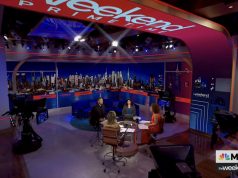
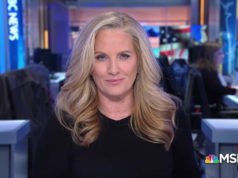
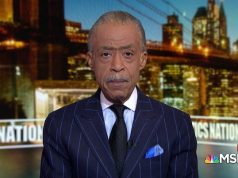
The Weekend: Primetime – 4/12/26 | 6PM
0 Comments
Most Voted